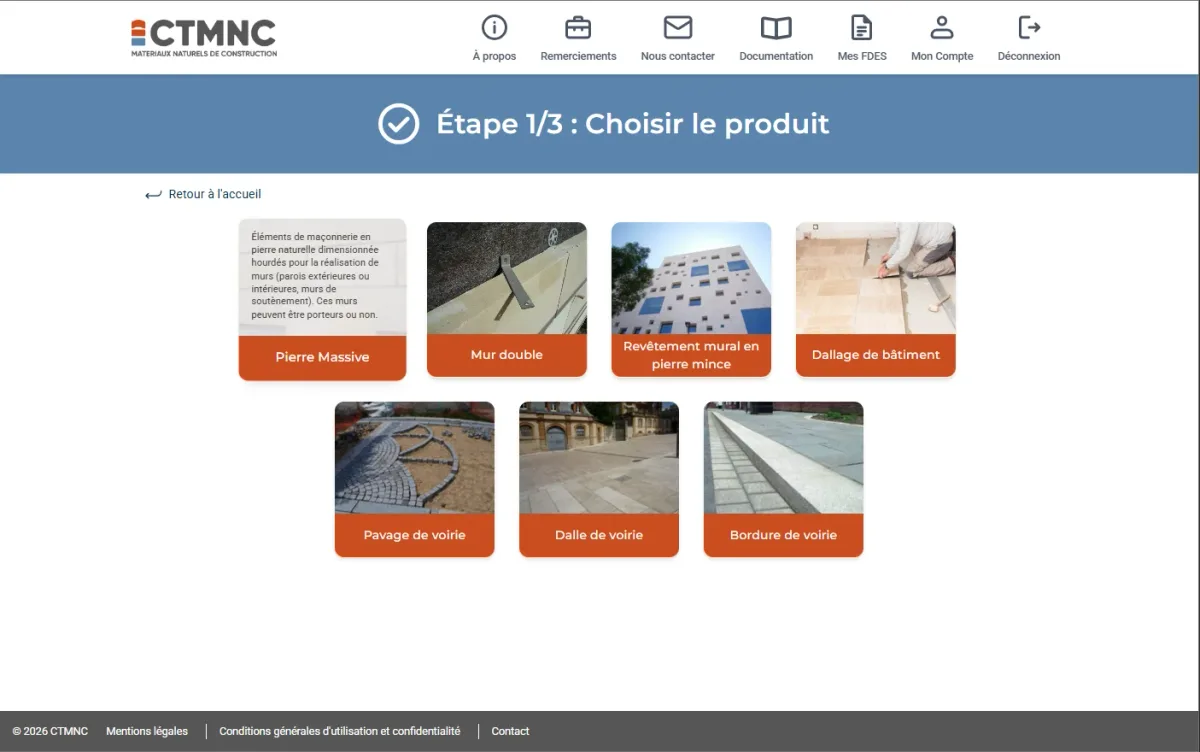
01 — Choose the product
The manufacturer starts by selecting the type of product it wants to declare, from the seven types covered by DimACV.

Case study · Distributor FDES configurator · Natural stone
Ailoop built DimACV for the CTMNC: a collective distributor FDES configurator that lets each manufacturer generate an FDES (the French EPD format, Fiche de Déclaration Environnementale et Sanitaire) matching its natural stone product and its delivery to the construction site.
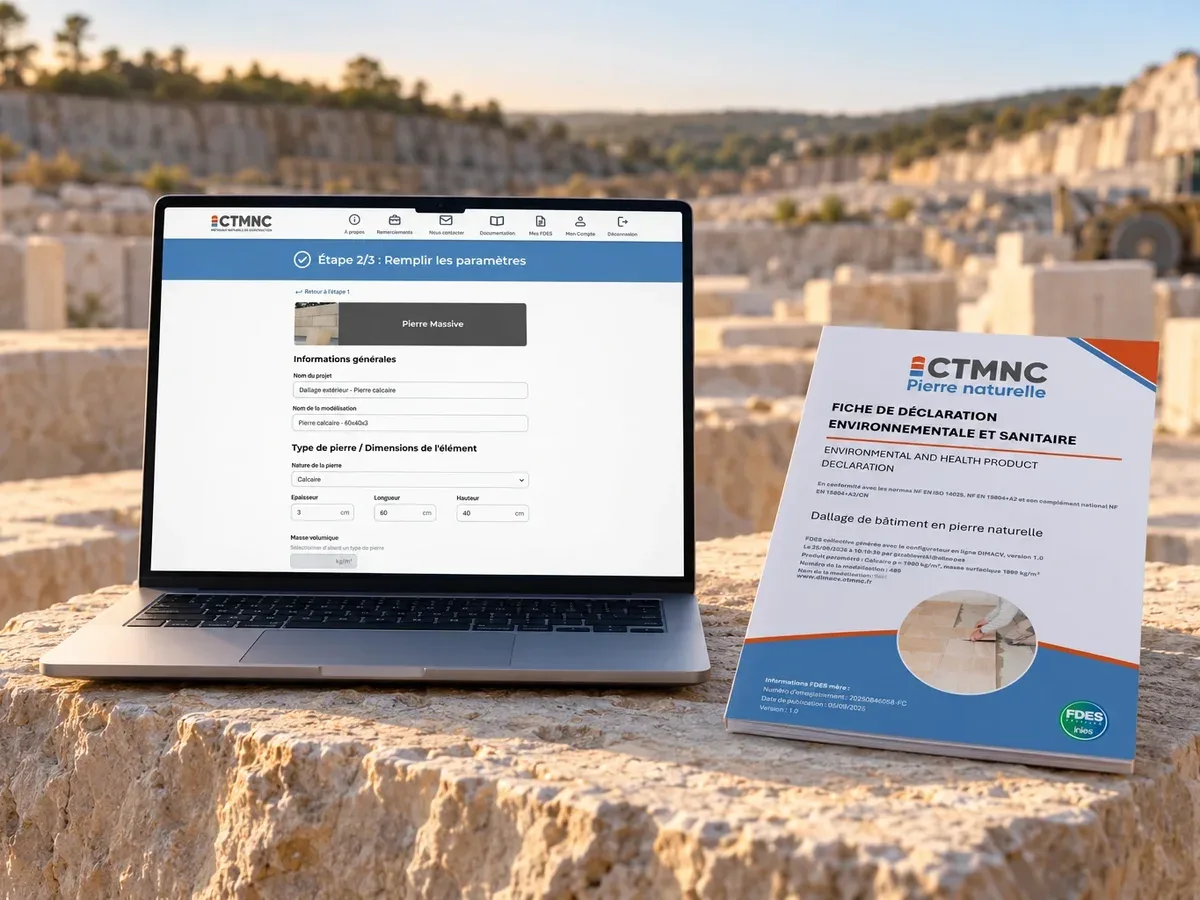
Ailoop built DimACV, the CTMNC’s collective FDES configurator, for seven types of natural stone products, from solid stone to road kerbs.
The CTMNC (Centre technique de matériaux naturels de construction, the technical centre for natural building materials) is the industrial technical centre of the clay brick and tile sector and the ornamental and building stone sector. It works on R&D, standardisation, quality, innovation, the environment and the sharing of knowledge.
Under its 2024–2027 Objectives and Performance Contract, it supports the transformation of these sectors around the industry of the future, the circular economy and the digital transition.

The seven product types covered by DimACV
The natural stone sector is marked by a wide variety of products, dimensions and installation configurations.
Traditional FDES creation, often one-off and individual, did not allow consistent, practical distribution across the whole sector.
Each manufacturer therefore had to be able to calculate the environmental impacts matching its actual product and its delivery to the construction site, within a framework shared by the whole sector.
FDES matching the manufacturer’s product
The CTMNC wanted every manufacturer in the sector to have INIES-compliant FDES, suited to the variety of their products and to actual market uses.
The collective distributor FDES configurator met this need: the sector’s environmental model and its scope are defined and verified upstream, then each manufacturer generates the FDES for its product while staying within that scope.
Seven product types, their business parameters and the sector’s environmental model brought together in a single web application, open to manufacturers.
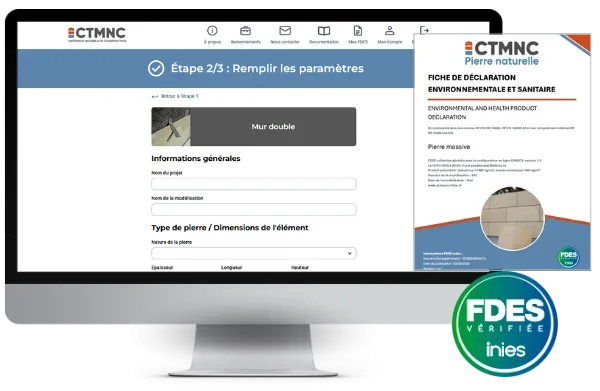
Starting from the sector’s environmental model, the manufacturer generates its FDES in three steps.
The manufacturer starts by selecting the type of product it wants to declare, from the seven types covered by DimACV.
The form adapts to the selected product and lets the user enter the parameters needed for the environmental calculation.
Depending on the product, the form only shows the parameters that apply to it.
The delivery distance to the construction site is built into the data used to calculate the environmental impacts of the product.
Each choice is linked to the data and rules of the sector’s LCA model built into the configurator.
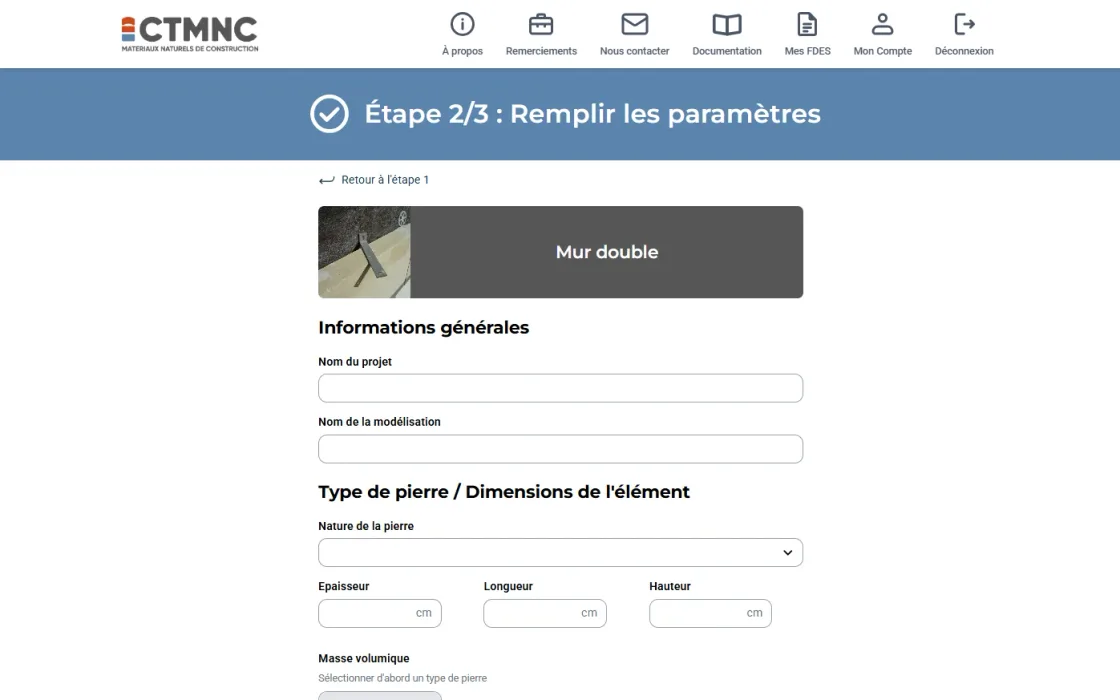
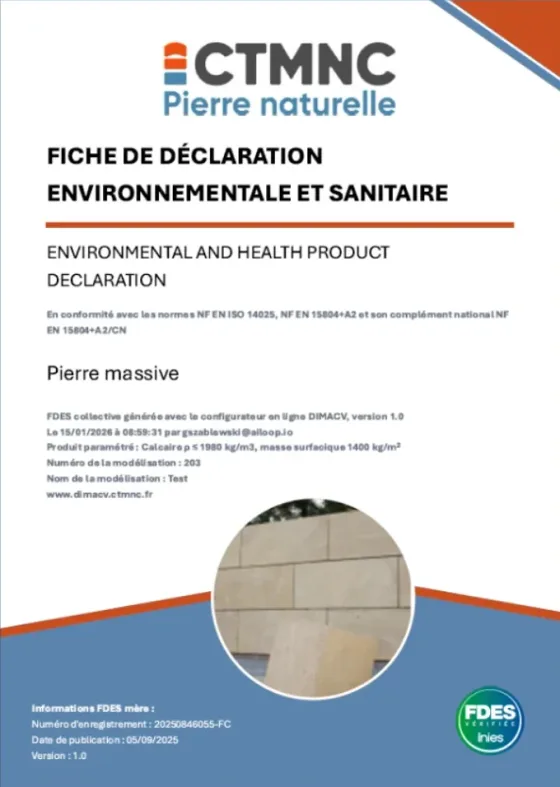
Once the product characteristics and the delivery distance are entered, the configurator generates the FDES matching the manufacturer’s product.
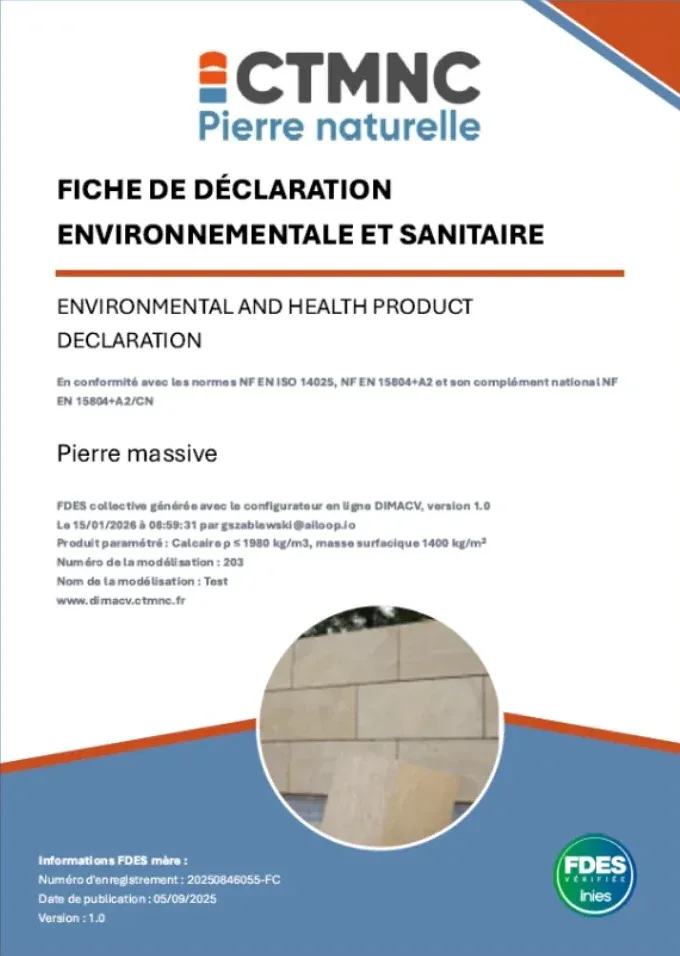
The document brings together the product’s life cycle assessment data, including environmental impacts, use and end-of-life scenarios, and the essential technical information.
The export in the XML format standardised by INIES lets the FDES environmental data be used in building LCA software.
The Excel file contains, for each stage, the values of all the environmental indicators.
Under the hood
Ailoop turned the sector’s data and environmental model into a business application that generates the related deliverables automatically.
Natural stone product data and transport data.
Integration of the LCA expertise and the DimACV project rules.
Parameter entry and automated calculation of the results.
FDES · INIES XML · Excel
The DimACV project combines environmental modelling, data structuring and software development to turn a sector’s LCA model into an FDES configurator that all its manufacturers can use.
DimACV now enables the whole natural stone sector to distribute INIES-compliant FDES whose data can be used directly in building LCA software.
Each FDES reflects the type of stone, dimensions, installation, finishes and delivery distance of the product declared.
One methodological framework for every manufacturer in the sector, instead of one-off individual studies.
The FDES are INIES-compliant and their data can be used directly in building LCA software.
Ailoop built DimACV for the CTMNC: a collective distributor FDES configurator covering seven types of natural stone products. It lets each manufacturer generate an FDES matching the characteristics of its product and its delivery to the construction site, then produce the related PDF, INIES XML and Excel deliverables. The product data, LCA modelling and calculation algorithms were produced with WeLOOP.
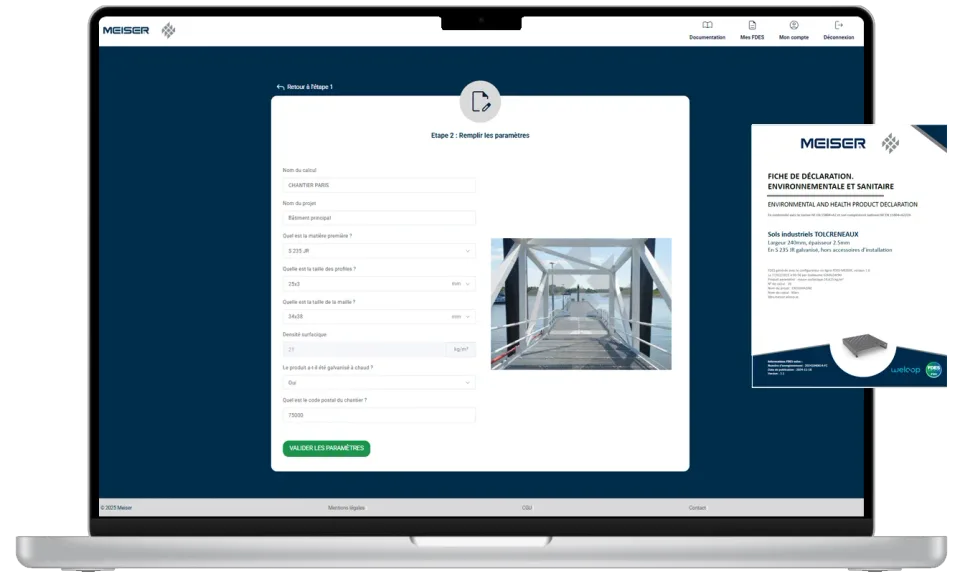
MEISER
A distributor FDES configurator built by Ailoop for MEISER’s press-locked gratings, electroforged gratings and industrial flooring.
We can analyse your products, your data and your environmental model to determine which type of configurator suits your sector.